If you are planning a trip to Sri Lanka in July or August, adding the Kandy Esala Perahera to your itinerary can give you a very different perspective of the country. This is not simply a colourful cultural show arranged for visitors. It is a centuries-old religious tradition centred on the Sacred Tooth Relic of the Buddha and deeply connected with the history and traditions of Kandy.
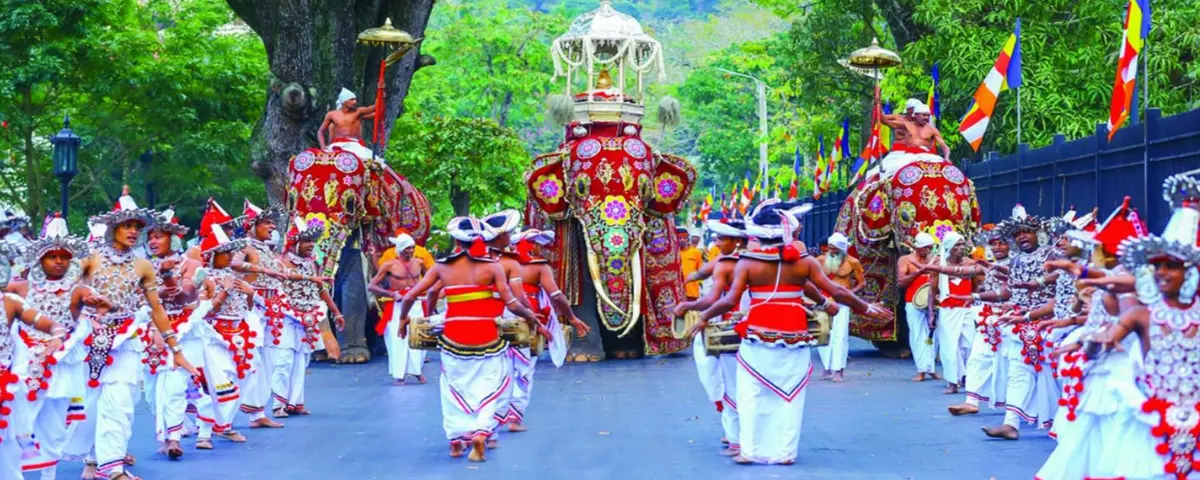
For international travellers, the Kandy Perahera offers an opportunity to see Kandyan dancers, traditional drummers, torch bearers, decorated elephants and religious processions moving through the historic streets of Kandy. At the same time, it is important to remember that this is a sacred festival and to experience it with appropriate respect.
In this guide, we explain the history and significance of the Kandy Esala Perahera, the Kandy Esala Perahera dates for 2026, what happens during the procession, where to watch it, how to plan your accommodation and how to include the festival in a wider Sri Lanka holiday.
What is the Kandy Esala Perahera?
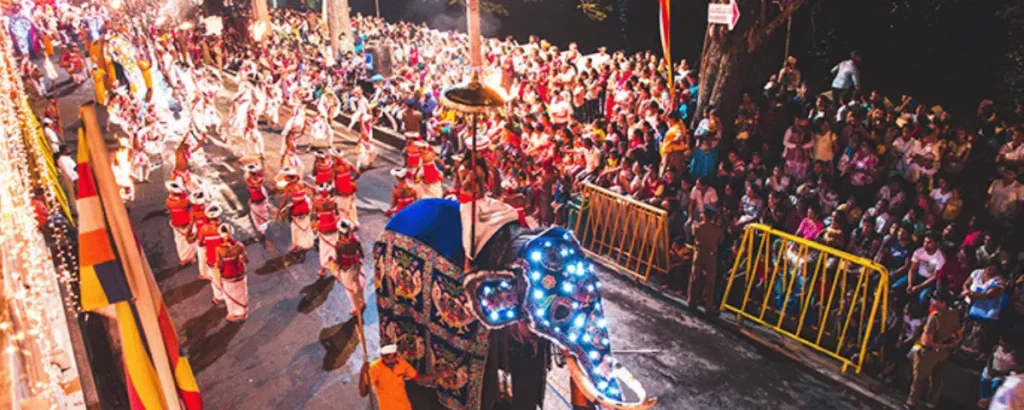
The Kandy Esala Perahera is one of Sri Lanka’s most important Buddhist cultural and religious festivals. It takes place annually in Kandy, the historic hill capital of Sri Lanka, during the month of Esala, generally falling in July or August.
At the heart of the festival is the Sri Dalada Maligawa, or Temple of the Sacred Tooth Relic. The temple houses the Sacred Tooth Relic of Gautama Buddha and is one of the most revered Buddhist sites in Sri Lanka. The temple itself is part of the UNESCO-listed historic city of Kandy.
The procession is traditionally held to honour the Sacred Tooth Relic and to invoke blessings for the country and its people. It also incorporates traditions associated with four important devales, or shrines, dedicated to Natha, Vishnu, Kataragama and Pattini.
Sri Lanka Tourism describes the festival as one of the country’s most famous religious celebrations, with the procession combining the Dalada Maligawa procession with those of the four devales.
For visitors, the result is an extraordinary combination of religion, music, dance, traditional costumes, craftsmanship and centuries-old customs.
History of the Kandy Esala Perahera
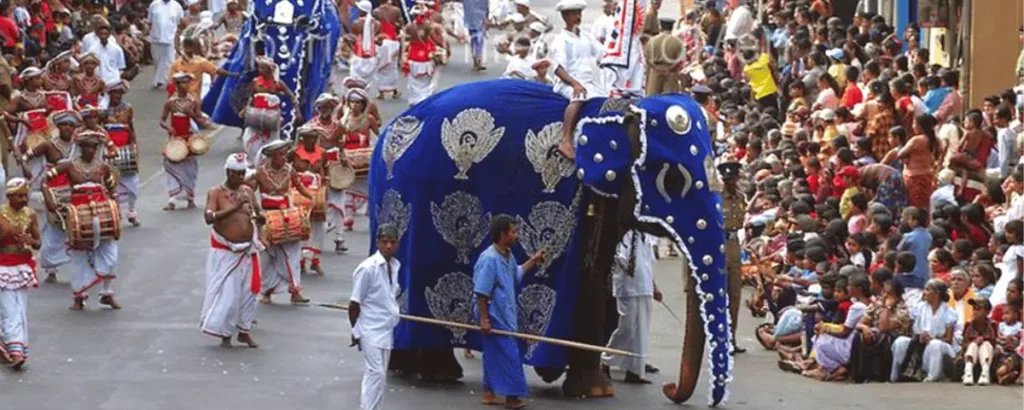
The history of the festival reaches much further back than modern tourism.
The Esala festival has traditionally been associated with rituals seeking blessings for rain and agricultural prosperity. Over time, it became closely connected with the veneration of the Sacred Tooth Relic.
The Tooth Relic itself has played an important role in Sri Lankan history for many centuries. According to the traditional history of the relic, it was brought to Sri Lanka from India and became closely associated with royal authority. Processions connected with the relic were conducted in earlier capitals before the relic eventually came to be housed in Kandy.
The modern form of the Kandy Perahera is particularly associated with the reign of King Kirthi Sri Rajasinghe, who ruled the Kandyan Kingdom during the 18th century. During his reign, the Sacred Tooth Relic was made accessible to the wider public through a grand procession.
When the Kandyan Kingdom came under British rule in 1815, responsibility for the Sacred Tooth Relic passed to the Buddhist clergy. The position of the Diyawadana Nilame, the lay custodian of the Temple of the Tooth, became particularly important in administering the traditions surrounding the relic.
Today, the procession continues as a living tradition rather than simply a historical recreation.
When is the Kandy Esala Perahera held?
The dates of the Kandy Esala Perahera change from year to year because they are connected with the traditional Buddhist calendar and ceremonial calculations.
For travellers planning ahead, the Kandy Esala Perahera 2026 dates have now been officially announced.
According to the Sri Dalada Maligawa, the 2026 festival will take place from 18 August to 28 August 2026. The five Kumbal Perahera processions are scheduled for 18–22 August, followed by five Randoli processions from 23–27 August. The festival concludes on 28 August with the traditional water-cutting ceremony followed by the daytime Perahera.
Kandy Esala Perahera 2026 dates
| Date | Event |
|---|---|
| 18 August 2026 | 1st Kumbal Perahera |
| 19 August 2026 | 2nd Kumbal Perahera |
| 20 August 2026 | 3rd Kumbal Perahera |
| 21 August 2026 | 4th Kumbal Perahera |
| 22 August 2026 | 5th Kumbal Perahera |
| 23 August 2026 | 1st Randoli Perahera |
| 24 August 2026 | 2nd Randoli Perahera |
| 25 August 2026 | 3rd Randoli Perahera |
| 26 August 2026 | 4th Randoli Perahera |
| 27 August 2026 | Final Randoli Perahera |
| 28 August 2026 | Water-cutting ceremony and Day Perahera |
The official Sri Dalada Maligawa schedule should always be checked before travelling, as individual arrangements and practical access can change.
What happens during the Kandy Perahera?
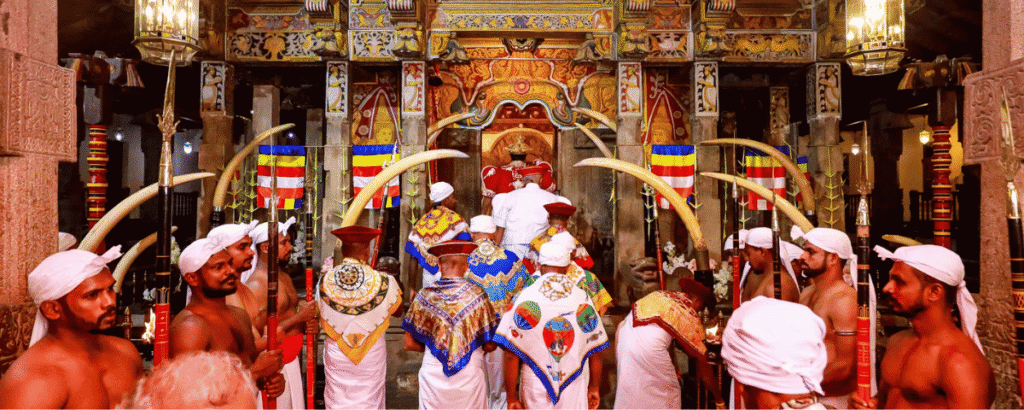
The festival develops in scale and grandeur over several nights.
Kumbal Perahera
The first five processions are known as the Kumbal Perahera. These processions are generally more restrained than the later Randoli nights.
They include traditional drummers, dancers, torch bearers, elephants and representatives of the religious institutions connected with the festival. The procession gradually builds in scale as the nights progress.
Randoli Perahera
The following five nights are known as the Randoli Perahera.
These are the more elaborate processions and traditionally culminate in the grand final Randoli Perahera. Decorated elephants, traditional dancers, drummers, torch bearers and ceremonial officials form part of the procession.
The official Kandy Esala Perahera history explains that the Randoli tradition has historical links with the palanquins used by royal queens. A palanquin remains part of the procession today as a ceremonial tradition.
The Grand Final
For many visitors, the final Randoli Perahera is the highlight.
The elephants are more elaborately decorated, the traditional performers appear in full ceremonial dress and the procession becomes particularly impressive as it moves through the illuminated streets.
The Maligawa Tusker occupies a position of special importance. A ceremonial casket representing the Sacred Tooth Relic is carried beneath a canopy on the tusker. Sri Lanka Tourism identifies the Maligawa Tusker as the central elephant associated with carrying the replica casket.
Music, dance and traditional performers
One of the most memorable elements is the sound.
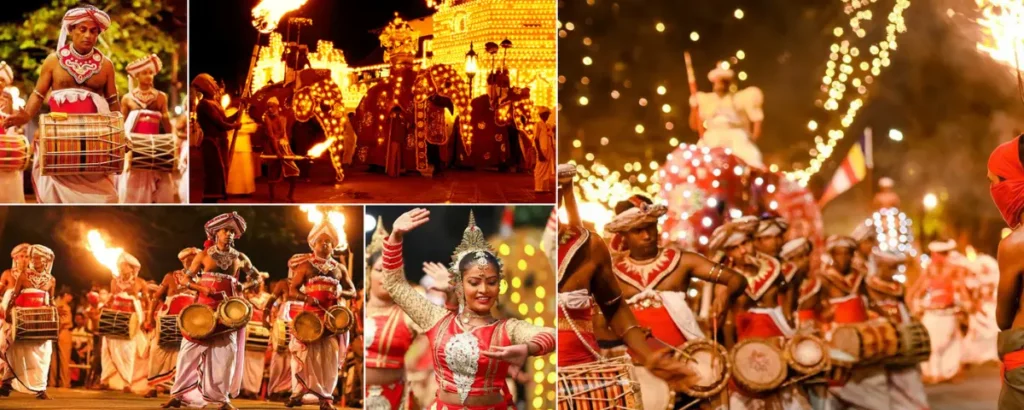
Kandyan drummers provide a powerful rhythm throughout the procession. Alongside them are traditional dancers, whip crackers, fire performers, torch bearers, flag bearers and other ceremonial groups.
The combination of movement, music, light and traditional costumes makes the procession visually striking. However, these performances should be understood as part of a religious and cultural ceremony rather than simply entertainment.
Why is the Kandy Esala Perahera important to Sri Lanka?
The importance of the festival goes beyond tourism.
The Sacred Tooth Relic has played a central role in Sri Lanka’s Buddhist and royal history. The procession therefore represents an important connection between religion, history, traditional authority and the cultural identity of the Kandyan region.
The festival also brings together Buddhist traditions and customs associated with the four devales. Sri Lanka Tourism notes that these include Natha, Vishnu, Kataragama and Pattini, reflecting the long-standing interaction of Buddhist and Hindu traditions within Sri Lankan culture.
For local people, the Perahera can be an annual religious observance, a family tradition and an important expression of cultural identity.
That is why visitors should approach the event differently from a commercial festival or staged cultural performance.
Where is the Kandy Esala Perahera held?
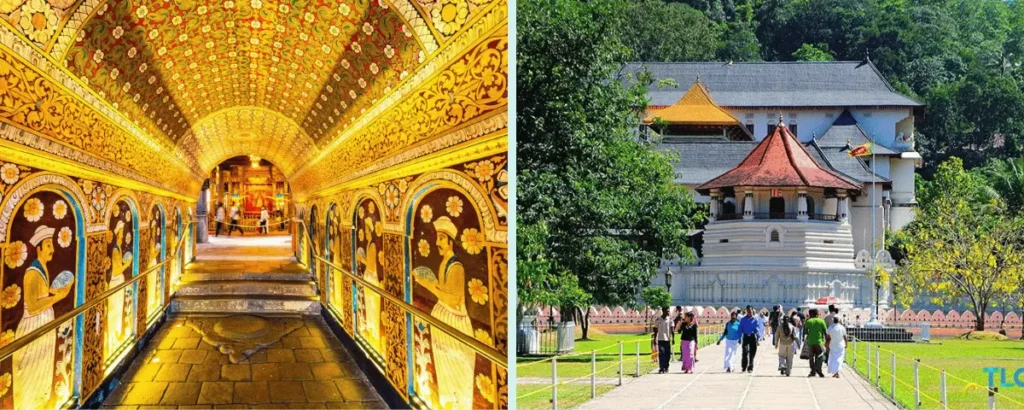
The festival takes place in and around the historic centre of Kandy Sri Lanka, with the Sri Dalada Maligawa at its heart.
The procession moves through streets around the Temple of the Tooth and Kandy’s historic centre before returning to the temple area. The exact route and access arrangements can be subject to the official festival arrangements for each year.
The four devales also play an important role in the ceremony. The combined procession brings together the four devale processions and the Dalada Maligawa procession.
Because central Kandy becomes extremely busy during the main nights, visitors should expect restricted vehicle access and substantial pedestrian traffic. Exact road closures should be checked locally before travelling rather than assumed in advance.
How to watch the Kandy Esala Perahera
There are two main approaches: finding a place along the public viewing areas or reserving a seat.
Reserved seating
Reserved seating can be a comfortable option, particularly for international visitors who want a clear view without standing for several hours.
For 2026, the Kandy Municipal Council has launched an official online facility for reserving seats at the Queens Corridor.
If you are booking independently, use an official or reputable booking source and check exactly what is included before paying.
Watching from the street
It is also possible to experience the atmosphere from public areas along the route.
However, popular locations become crowded, particularly on the later Randoli nights. Arriving early is therefore important if you want a good view.
Expect walking and waiting
Do not plan to arrive in Kandy shortly before the procession begins and expect to drive directly to your viewing point.
During the main nights, allow extra time for:
- Traffic congestion
- Road restrictions
- Walking from your vehicle or hotel
- Finding your viewing location
- Security checks where applicable
- Waiting before the procession arrives
Comfortable footwear is highly recommended.
Weather
Although the procession takes place in the evening, Kandy can be warm and humid, and August weather can include rain.
Carry water and consider a compact rain jacket or umbrella. If you have reserved seating, check whether your particular location provides protection from rain.
How to book seats for the Kandy Perahera
If you want a guaranteed viewing position, it is sensible to arrange seating as early as possible.
Demand can be high, particularly for the final Randoli Perahera.
For 2026, the Kandy Municipal Council has an official online seat-reservation facility. Its published information lists selected Perahera nights and provides online booking.
Because seating arrangements, prices and availability can change, travellers should always verify the latest details directly through the official booking facility or through a trusted Sri Lankan tour operator.
Be particularly careful with unofficial websites or individuals offering “VIP” tickets without clearly explaining the location, date and terms.
What should tourists wear to the Kandy Esala Perahera?
The Kandy Perahera is a religious and cultural event, so modest clothing is the safest choice.
Visitors should consider:
- Lightweight trousers or longer skirts
- Shirts or tops covering the shoulders
- Comfortable walking shoes
- A light rain jacket
- Minimal accessories that could become uncomfortable in a crowd
If you also plan to visit the Temple of the Tooth, remember that it is an active place of Buddhist worship. Appropriate dress is particularly important there.
Avoid treating the procession as a costume opportunity or wearing clothing that could be considered disrespectful.
Where should you stay in Kandy during the Perahera?
If your main purpose is to attend the festival, staying in Kandy has obvious advantages.
You can walk to the viewing area rather than depending on a vehicle during road restrictions. However, accommodation in central Kandy can become heavily booked during the festival period.
Book early if you want a particular hotel or room category.
Another option is to stay slightly outside central Kandy and arrange private transportation. This can provide greater flexibility, particularly if you are combining the Perahera with other parts of Sri Lanka.
How to combine the Kandy Esala Perahera with a Sri Lanka tour
One of the best ways to experience the festival is to make it part of a wider private Sri Lanka itinerary.
Kandy + Nuwara Eliya
After experiencing the Perahera, travel into the cooler hill country towards Nuwara Eliya. Tea plantations, waterfalls and mountain scenery make this a natural continuation of a Kandy visit.
Kandy + Ella
For travellers who want the famous hill-country railway experience, Kandy and Ella can be combined with a scenic train journey through the mountains.
Cultural Triangle + Kandy
Start with Sigiriya, Dambulla and other ancient sites before continuing to Kandy. This combination gives travellers a strong introduction to Sri Lanka’s archaeological and religious heritage.
Colombo + Kandy
If your holiday is relatively short, you can combine Colombo with Kandy and then continue towards the south coast or hill country.
A wider private Sri Lanka tour
For a longer holiday, Kandy can be positioned between the Cultural Triangle and the hill country, followed by Yala, the south coast or other destinations.
At Off2SriLanka Tours, we can arrange a private journey around the festival, including accommodation, private transportation, sightseeing and other elements of your Sri Lanka itinerary.
Kandy Esala Perahera for first-time visitors
If this is your first Perahera, prepare for crowds.
The experience involves waiting, standing or walking, loud drumming and large numbers of people. The streets can become congested, especially on the final nights.
Families with children can certainly enjoy the festival, but younger children may find the crowds and noise tiring. If travelling with elderly family members or anyone who has difficulty standing for long periods, reserved seating and careful accommodation planning can make the experience considerably easier.
Most importantly, remember that you are entering an important religious event. Avoid pushing through crowds, blocking the procession route or behaving as though you are attending a stage performance.
Frequently Asked Questions
What is the Kandy Esala Perahera?
The Kandy Esala Perahera is a major Buddhist religious and cultural procession held annually in Kandy to honour the Sacred Tooth Relic of the Buddha. It includes processions from the Temple of the Tooth and four associated devales.
When is the Kandy Esala Perahera held?
It is traditionally held during July or August. The dates change each year. In 2026, the main festival runs from 18 to 28 August, according to the official Sri Dalada Maligawa schedule.
How many days does the Kandy Perahera last?
The 2026 programme runs from 18 to 28 August, with five Kumbal nights, five Randoli nights and the concluding ceremonies and daytime procession.
Where can I watch the Kandy Perahera?
You can watch from designated public areas along the procession route or reserve seating. Reserved seating can be preferable if you want a more comfortable and predictable viewing experience.
Do I need tickets to watch the Kandy Esala Perahera?
Not necessarily for every public viewing area. However, reserved seats are available for selected locations and can provide a much better viewing experience. For 2026, the Kandy Municipal Council operates an official online seat-reservation facility.
How early should I arrive?
For popular viewing areas, arriving well before the procession is advisable. Allow additional time for walking, traffic restrictions and finding your seat or viewing position.
Is the Kandy Perahera suitable for families?
Yes, but families should be prepared for crowds, noise, waiting and walking. Families with very young children may prefer reserved seating.
What should I wear to the Kandy Perahera?
Choose comfortable and modest clothing. If you plan to visit the Temple of the Tooth, dress respectfully as you would for a Buddhist place of worship.
Can I take photographs during the Perahera?
Photography is generally an important part of the visitor experience, but respect the religious nature of the event. Do not obstruct performers or devotees for a photograph, and follow any official restrictions regarding photography, filming or equipment. The official Perahera media authorities specifically manage media access and photographic permissions.
How can I include the Kandy Esala Perahera in my Sri Lanka holiday?
The festival can easily be incorporated into a private itinerary combining Kandy with the Cultural Triangle, Nuwara Eliya, Ella, Colombo, Yala or the southern coast. The best combination depends on the length of your holiday and your interests.
Experience the Kandy Esala Perahera with Off2SriLanka
The Kandy Esala Perahera is best experienced as part of a well-planned Sri Lanka journey rather than as a single event squeezed into a busy itinerary.
If you are planning to visit Sri Lanka during the Perahera season, Off2SriLanka Tours can help you arrange a private itinerary around the festival, including hotels, private transportation, sightseeing and other destinations across Sri Lanka.
The festival is spectacular, but its real importance lies in its history, faith and living traditions. Take the time to understand what you are seeing, plan your visit carefully and experience the Kandy Perahera with the respect it deserves.